

New loads keep arriving.
Housing, commercial growth, industrial investment, EV charging, and distributed energy all depend on distribution infrastructure.
Domestic Energy Infrastructure
Built for the load ahead.
Emotiv Mobility manufactures pad-mounted and pole-mounted distribution transformers for utilities, EPCs, and infrastructure owners. Domestic production and specification-driven refurbishment programs support greater availability, supply certainty, and controlled execution.
Distribution Transformer Basics
A distribution transformer is the final voltage transformation stage in a power distribution system.
It steps distribution voltage down to the service voltage used by homes, facilities, equipment, and charging infrastructure.
Emotiv Mobility focuses on pad-mounted units for underground systems and pole-mounted units for overhead systems, with each configuration reviewed against the customer requirement.
The Infrastructure Reality
Domestic transformer manufacturing helps utilities strengthen availability and supply certainty when legacy lead times put energy infrastructure schedules at risk.
Housing, commercial growth, industrial investment, EV charging, and distributed energy all depend on distribution infrastructure.
Aging assets, import dependence, and legacy lead times can turn transformer availability into a schedule risk.
Emotiv Mobility combines specification control, manufacturing discipline, refurbishment, and program coordination to help utilities move critical work forward.
Product Range
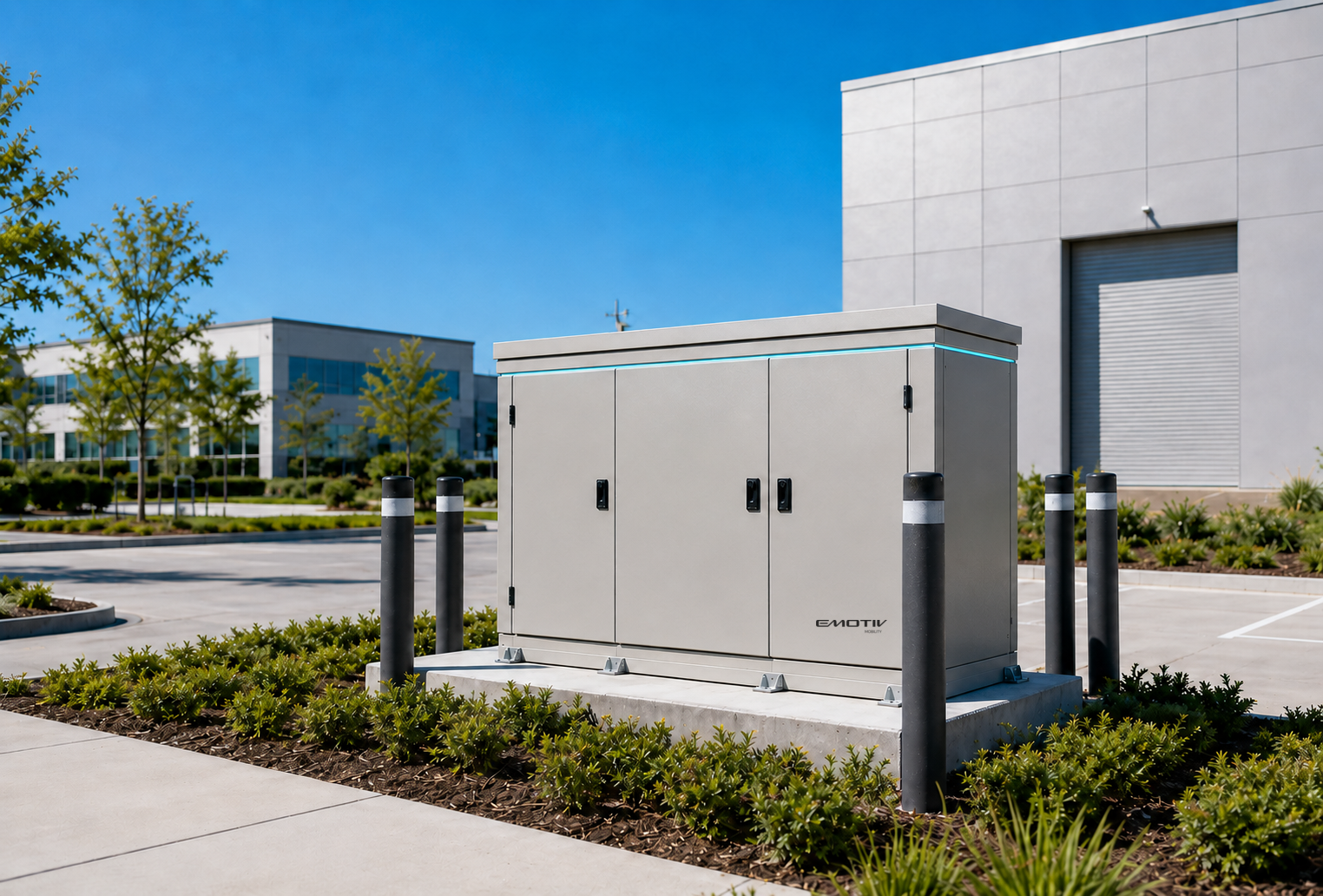
Ground-level distribution equipment housed in a secured enclosure for underground systems serving residential, commercial, industrial, and electrified infrastructure applications.
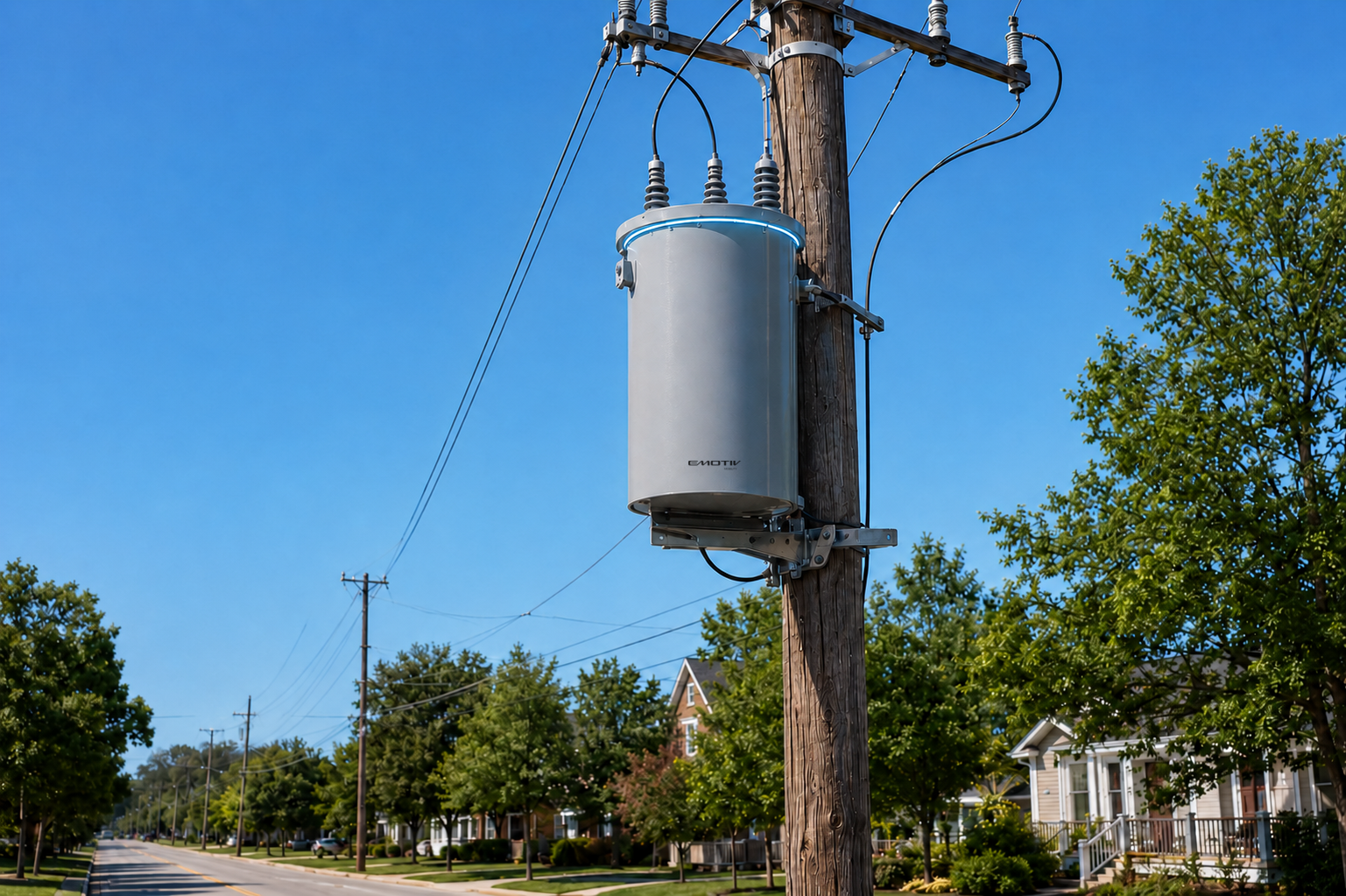
Overhead distribution equipment designed for utility networks where service is delivered through pole-based infrastructure across residential, rural, suburban, and expanding service areas.
Portfolio ranges reflect the current product focus for both transformer types. Final configuration depends on utility specifications, voltage class, phase, feed arrangement, accessories, testing, documentation, and applicable requirements.
Technical Alignment
A meaningful transformer discussion begins with the electrical system, installation environment, utility requirements, and supply need.
kVA, primary and secondary voltage, phase, frequency, insulation, BIL, impedance, and temperature rise.
Radial or loop feed, single or dual voltage, grounding, protection, switching, accessories, and connection requirements.
Pad or pole installation, enclosure, fluid, ambient conditions, corrosion exposure, service access, refurbishment considerations, and site constraints.
Utility submittals, drawings, test scope, quality records, traceability, certification, and acceptance requirements.
Program volume, mix, required timing, replacement demand, packaging, logistics, and ongoing support expectations.
Product configurations are evaluated against the customer specification and applicable IEEE C57.12.00 requirements, NEMA TR 1 guidance, DOE efficiency requirements, utility standards, testing, documentation, and certification requirements.
Manufacturing Discipline
Emotiv Mobility applies automotive-grade production discipline shaped in complex, high-volume manufacturing environments to transformer manufacturing and energy infrastructure.
Turn utility and project inputs into controlled engineering, quality, supply, and documentation requirements.
Define repeatable work, material flow, quality checkpoints, and ownership before volume creates variation.
Connect testing and validation, documentation, traceability, quality records, and issue response to the transformer and customer requirement.
Align manufacturing, materials, logistics, timing, and program communication around the delivery need.
Where They Work
The product format changes with the network. The need for dependable distribution remains constant.
Underground and overhead networks supporting new service, replacement demand, and system expansion.
Neighborhoods, mixed-use development, and public infrastructure that depend on planned distribution capacity.
Facilities, campuses, production sites, and equipment loads that require application-specific power distribution.
Vehicle charging and related infrastructure that add new demand to local distribution systems.
The Transformer Story
See how Emotiv Mobility connects transformer manufacturing to utility modernization, electrification readiness, growing load, and the infrastructure behind sustainable mobility.
Why Emotiv Mobility
Transformer manufacturing has to move beyond engineering intent and into repeatable, specification-driven execution.
Emotiv Mobility connects engineering, quality systems, testing, documentation, traceability, material flow, and supply coordination so the transformer and the operating system behind it advance together.
New Build + Refurbishment
Emotiv Mobility supports new distribution transformer manufacturing and specification-driven refurbishment programs. The right path depends on the utility requirement, asset condition, timing, and acceptance criteria.
Pad-mounted and pole-mounted distribution transformers are configured around the electrical system, installation environment, testing, documentation, volume, and timing.
When asset condition and customer specifications support it, controlled refurbishment can extend useful service, reduce capital pressure, and improve transformer availability.
Future-Ready Infrastructure
Distribution transformers remain foundational to reliable power delivery. When specified, Emotiv Mobility can accommodate future sensing, communication, and asset-visibility considerations without compromising the quality, testing, documentation, or serviceability required today.
Prepared to accommodate future monitoring and sensing requirements when specified, without changing the transformer’s core role.
Designed with awareness of future communication pathways that may support broader utility modernization when specified.
Supports future visibility into transformer operating conditions when compatible monitoring technologies are specified.
Frequently Asked Questions
Direct answers for utility, engineering, procurement, EPC, and infrastructure teams.
Start a Transformer Discussion
Share the program path, new build or refurbishment, application, transformer type, ratings, utility specifications, asset condition when applicable, volume, and timing. Emotiv Mobility will begin with a focused technical, manufacturing, and supply discussion.