

Capture mechanical input
The HPTC connects to rotational energy within the drivetrain architecture.
Emotiv Mobility Innovation
Power the work. Not just the drive.
A drivetrain-integrated mechanical energy recovery architecture for Class 3-7 commercial vehicles that converts rotational energy into usable electrical power.
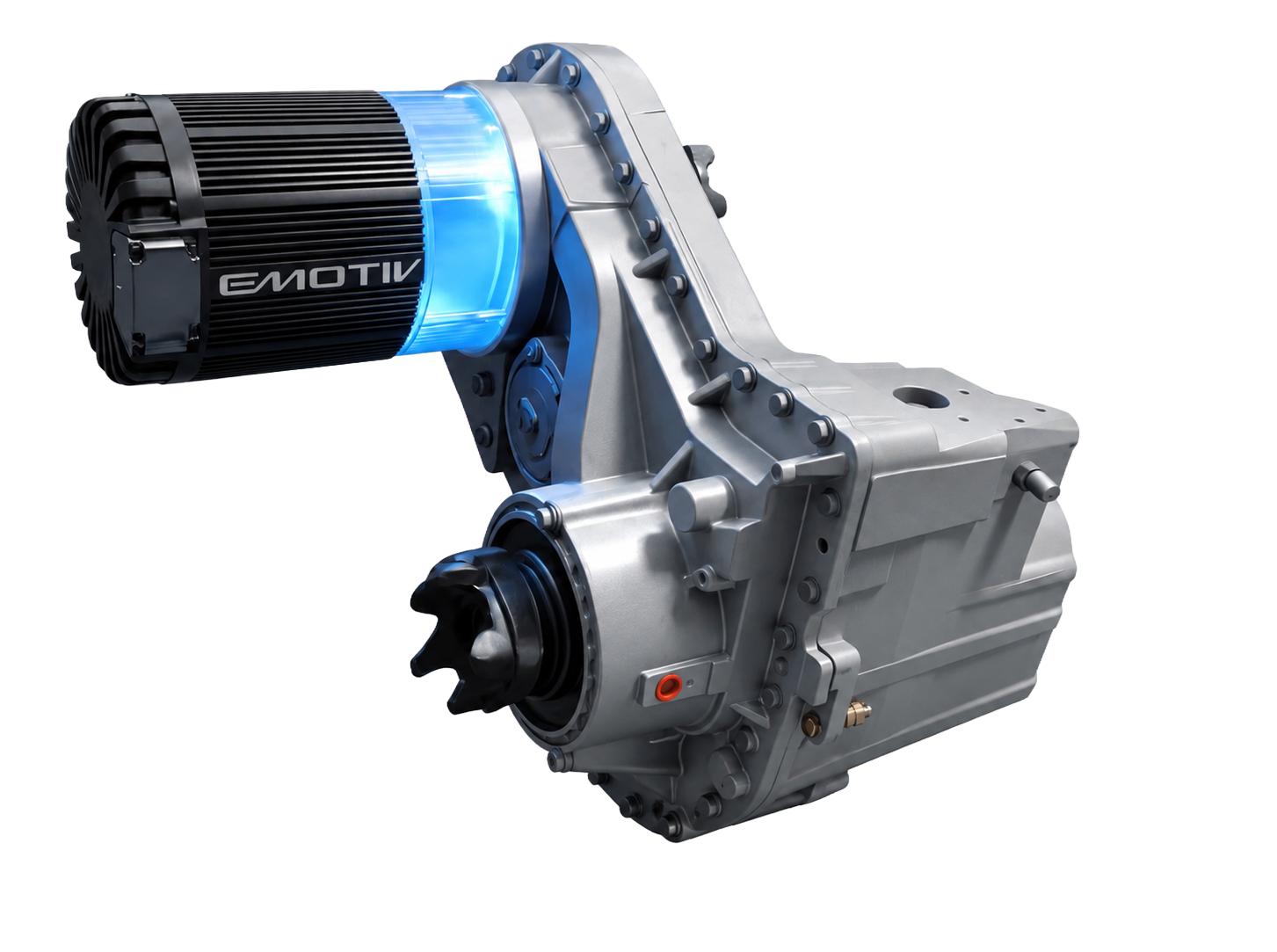
HPTC in Motion
The HPTC connects drivetrain rotation, electrical generation, onboard storage, and the systems that support commercial work.
The Direct Answer
The Emotiv Mobility HPTC captures rotational kinetic energy at the transfer case, converts it through a motor-generator, and directs the resulting electrical power to onboard storage, vehicle systems, or auxiliary equipment.
It gives vehicle manufacturers another way to evaluate hybrid electrification around the platform's actual duty cycle, without reducing the decision to conventional or fully electric.
The Operating Reality
Movement is only part of the job. Vocational, utility, specialty, and regional commercial vehicles also operate tools, controls, systems, and equipment.
Route, load, idle time, packaging, operating environment, and auxiliary demand all change the powertrain decision. The HPTC begins with those realities and puts energy already moving through the vehicle to work.
How the HPTC Works
See how the HPTC captures drivetrain rotation and converts it into electrical power for onboard storage, vehicle systems, and auxiliary equipment.
The HPTC connects to rotational energy within the drivetrain architecture.
Mechanical input is converted into electrical power through an integrated motor-generator relationship.
Vehicle controls direct generated power to onboard storage and the systems defined by the platform.
Usable electrical power can support vehicle systems and auxiliary equipment according to the duty cycle.
What It Enables
The opportunity is not a universal promise. It is a platform-specific way to connect motion, energy, and commercial work.
Create electrical capacity for storage, controls, and vehicle systems defined by the architecture.
Support equipment and operational loads that continue after the vehicle reaches the jobsite.
Evaluate hybrid capability around route, load, idle behavior, packaging, and real operating demand.
Commercial Vehicle Applications
The strongest opportunity appears where mobility and equipment power are part of the same job.

For platforms that move between transportation, equipment operation, field service, and demanding jobsite requirements.

For mission-specific vehicles with power requirements, operating environments, or packaging constraints that call for a different approach.

For routes where load, operating pattern, idle behavior, and onboard electrical demand create a case for hybrid architecture.
Engineering Perspective
Aaron Rivers, CEO, and Tim Kelly, lead engineer, explain the commercial vehicle problem, how the HPTC captures rotational energy, and what the architecture can mean for OEMs and fleets.
Platform Alignment
Emotiv Mobility works with vehicle manufacturers to understand the architecture, duty cycle, and power demand before defining the technical path.
Start with vehicle class, drivetrain, route, load, idle behavior, operating environment, and the work the platform performs.
Review packaging, controls, storage, system interfaces, and the electrical or auxiliary loads the platform must support.
Define the next level of technical review and the operating questions that must be answered for the platform.
Why Emotiv Mobility
A commercial vehicle innovation has to work beyond the engineering model. It must connect to the platform, manufacturing system, supply chain, assembly process, and launch plan.
Emotiv Mobility brings those disciplines together to help move engineered concepts toward executable vehicle programs.
Frequently Asked Questions
Clear answers for vehicle engineering, product, and platform teams.
Start a Technical Discussion
Tell us what the vehicle does, how it operates, and what it needs to power. Emotiv Mobility will begin with a focused platform discussion.